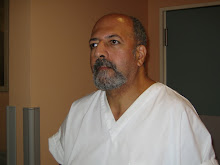
Marc Almond, Almeida, London
By Sam Ingleby
23 July 2004
"I love this next song," says Marc Almond, the former front man of the Eighties synth-band Soft Cell, as he stalks across the stage, mopping his brow with a scarlet towel, "because it's so un-PC. Only a Frenchman could have written it." As the audience hushes in anticipation, Almond launches into the first lines of "The Slave", by Serge Lama: "In a Byzantine harem/ Seeking paradise/ I disguised myself as a dog," he croons, inexplicably, before the song goes on to deal with a variety of sexual predilections including bestiality and transsexualism. There is not the hint of a smirk from an audience completely in his grasp.
This, then, is the return of Marc Almond for a week-long run of performances showcasing what he calls "Sin songs - Torch and Romance". The show begins with a selection of tracks from Heart on Snow, his album of Russian torch songs. There's something about Almond's breathy, theatrical delivery, accompanied only by a backing track, that lends itself to these tortured songs of love and loss and he slips easily between English translations, and the Russian itself. The translations are projected on to the back of the stage, and it's wonderful to hear how impassioned a mundane line like "My patterned handkerchief is torn, because I am nervous" can sound when rolled around skilfully in Russian by Almond, and accompanied by melancholic strings and piano.
After the Russian section is over Almond begins to relax, and his band - two violinists, a guitarist and a double bassist - join him on stage to beef up the sound and allow him to dally in different genres including jazz and rumba. He treats what is a universally adoring audience to the first of a few chats and strolls around the dark, smoky stage, designed to resemble an abandoned jazz club, looking lean and at ease.
"Most of my songs are about doom, tragedy, death, and beauty. I've always tried to be positive about love but in my songs, it usually ends in drug addiction or death," he giggles. As if to prove a point he sings "The Lonely Go-Go Dancer", "Tenderness is a Weakness" and "Rouge and Perfume" in quick succession, a trio of songs, none of which end happily. After a particularly wrought moment Almond collapses on to his chair and drapes his towel around him, soaking up the applause.
He finishes his set with a version of "When Bad People Kiss" that he muddles through. However, his performance of "Ends in Tears", one of a handful of his own tracks he performs, is terrific example of synth-pop, as his mournful voice rises and falls around a squall of strings. There was never any question about an encore - "I'll try and sing one of those happy love songs now" Almond says as the chords of "Strangers in the Night" break out. He wanders out into the crowd to press the flesh - the transformation from Eighties pop star to chanteur truly complete.
To Sunday (020-7359 4404)
© 2004 Independent Digital (UK) Ltd
vendredi, juillet 23, 2004

Shane MacGowan: Catch a falling star
Thanks to Shane MacGowan's many friends, he's still with us and making music. The legendary Pogue meets Steven Hands
23 July 2004
When a person introduces himself with some version of the old "I'm mad, me" formula, you can usually bet that you're in for a thunderously dull time. But when it's Shane MacGowan barking out: "I'm a self-confessed certified lunatic" by way of greeting, you should bear in mind that he's the exception to the rule.
MacGowan, troubadour, inebriate and raconteur, and once the lead singer, songwriter and primary face of bands variously known as The Nipple Erectors, The Nips, Chainsaw, Pogue Mahone, The Pogues and The Popes, is mostly 46 years old. His teeth are 83, while his liver is approximately 106. I'm not medically trained: it may be older.
But then, as MacGowan quickly makes clear, I'm not really one to judge. "You're a slob," he ventures. It's true that I'm not wearing my Sunday best, but I had eschewed trainers this evening and am more than adequately attired for an evening in the pub.
However, what I deem appropriate clearly hasn't measured up to MacGowan's sense of fitness. "Look at me," he says, "I'm wearing a suit." And he is. Over his long-suffering frame hangs a funereal black suit, part Blues Brothers, part undertaker, with a hint of Kray, topped off with showbiz shades. However, hidden as it is beneath a menu of stains, it is smart dress in theory only.
Sartorial elegance is obviously something of an obsession with MacGowan: his next question is: "Would you get buried like that?" But perhaps I'm wrong to be surprised. After all, the non sequitur and surreal remark is the province of legends, and MacGowan is certainly that. He's sailed close to the wind for some time now, but when I turn the dust-to-dust question on him, he says he's more of an ashes-to-ashes man. "I'm gonna be cremated. I'll haunt the bastards if they don't. Those worms aren't gonna get me!"
The fact that he's still here at all is something of a mystery to medical science, but rock is littered with the grizzled survivors of bacchanalia and excess. It wasn't that long ago that MacGowan was being reported to the police after a suspected heroin overdose by a distressed and disapproving Sinead O'Connor.
MacGowan, it appears, is unrepentant: "I failed my French O-level, but je ne regrette rien." One reason he's still here is surely that he can rely on more than a little help from his friends. Luckily, the seemingly endless range of concerned individuals MacGowan has charmed into his orbit extend far beyond similarly compulsive running mates (Nick Cave) to more moderate consumers (Bono) and complete abstainers, such as O'Connor.
Chief among these is Gerry O'Boyle, MacGowan's manager, to all intents and purposes. O'Boyle's day job is as the manager of the Boogaloo Bar in Highgate, north London, a drinking hole favoured by the glitterati. When I arrive the only celebrity I see, MacGowan aside, is an EastEnder, although two Libertines are said to be arriving later in gig mode, which explains the kit set up in the bar.
O'Boyle is keen to tell me about MacGowan's current "projects". First is his contribution ("Road to Paradise") to a three-track EP recorded principally in recognition of the former Celtic winger Jimmy Johnstone, but made in aid of various charities. MacGowan shares billing with Jim Kerr (formerly of Simple Minds), John McLaughlin (part-architect of Busted) and Johnstone himself, who, MacGowan tells me, "is a great singer". (It should be noted that in spite of this magnanimous act, MacGowan has a pretty poor opinion of modern players, at one point exploding: "Footballers! Bunch of ballerinas playing to peasants!") O'Boyle is genial enough to play "Road to Paradise" over the PA, and there's a fire to MacGowan's delivery that's a revelation after years of relative silence.
MacGowan's second project is his appearance later this year in Johnny Depp's Restoration-era epic The Libertine, in which Depp plays the raffish playwright the Earl of Rochester opposite John Malkovich's Charles II. MacGowan's role is unclear. A solo album is mooted, as are a "month of Sundays" performances at Ronnie Scott's after Christmas, with "very special guests". I ask O'Boyle about labels, deals and suchlike, but things seem less than settled.
So, I ask MacGowan about the new material, and get an unexpected blast at one of the 20th century's musical icons. "Miles Davis spoke a load of shite. But the one good thing he did say is that you can't describe music. You can't describe a painting, and," he adds bizarrely, "you can't describe a particularly vicious dog turd." After a thoughtful gulp of lager, he reconsiders. "Actually, I've got bad short-term memory. Ask me again in 10 years' time, and I'll be able to tell you what it's about!" (To get the full MacGowan effect, you need to know that he punctuates every bon mot with a bandwidth of glottal static masquerading as a chuckle.)
The flesh may look weak, but the MacGowan spirit still burns with a greater intensity than whatever is lurking in the range of three liquid refreshers he has placed around him. A pint glass houses standard-issue lager, while one tumbler is host to what I surmise to be a multiple shot of brandy and Baileys. The third tumbler in this unholy trinity is some concoction of cocktail-style hue. Although each drink lasts the full two hours of our meeting, it's best not to try this at home, kids.
Like many poets and bar-room philosophers before him, MacGowan is an advocate of altered states, but he will admit to side effects. Were they worth it? "My side effects have definitely been inspiring, even if they're frightening. You've got to treat drugs with respect - if you smoke 100 Capstans a day, there's a chance you'll die very quickly. What is frightening is schoolkids doing hard drugs, because they don't know what they're doing. The dealers - I'd string 'em up! Smack is right out of the question, when you're willing to take a chance with every hit."
If you think there's a puritanical tone to MacGowan's views, well... "No, I escaped the poverty trap when I was pissed out of my head!"
Ah, yes, the poverty trap. The MacGowan family moved from their native Tipperary to Brighton for better prospects when MacGowan was just six. The accent may have gone through three or four well-travelled decades, but back then it marked MacGowan out for a few beatings from the local boys. With this baptism of bullying, MacGowan would have to be saintly not to feel resentment towards the English. He still maintains, variously, that "you just think we're fucking monkeys" (a recurrent MacGowan motif), and "the English think Ireland is a barbarian country".
Ever eager to put my head in the noose, I say that the old stereotypes of Ireland are alien to most people aged under 40 in England these days, and are as distant a race memory as the Empire. I'm even foolish enough to mention the fear and suspicion that (I've been told) existed in my native Birmingham after the pub bombings of 1974. Before I'm able to claim that these emotions are largely a thing of the past, MacGowan hisses: "So you think they're guilty?"
MacGowan's in his element now. Before the Birmingham Six were acquitted, he'd composed a song in their honour that was included on The Pogues' 1988 album If I Should Fall From Grace With God. "They're still doing time/ for being Irish in the wrong place/ And at the wrong time", went the lyrics, performed with barely controlled anger. But the subject of Anglo-Irish relations finds MacGowan at his most loquacious (which is saying something), and he unleashes the following pearls of wisdom:
"Trimble and Hume? They've got nothing in common."
"Sean MacBride, co-founder of Amnesty International? He won the Nobel peace prize. He wanted to fuck England. A man of high moral character."
"General Eoin O'Duffy, [of Ireland's Blueshirts, accused of being the equivalent to Hitler's Brownshirts] paid recruits £10 a day and all you can drink. All you had to do was march round town. March? They couldn't even walk straight!"
I decided to ask about The Pogues' 1985 album Rum, Sodomy and the Lash, the record that put MacGowan's career into overdrive, and said to be named after a (possibly apocryphal) quotation from Winston Churchill.
"Oh, yeah, this was [drummer] Andy Ranken's idea. Churchill said, 'All there is of naval tradition is rum, sodomy and the lash." Churchill was a piss artist, a global psychopath, a speed freak. He reneged on a deal not to bomb Dresden!"
Given MacGowan's hostility to this sceptred isle (the non-Celtic bits, anyway), it may surprise some that he spent time at the same ancient seat of learning as John Locke, Sir Christopher Wren, Andrew Lloyd Webber and, er, Dido - Westminster School in London. "It's meant to be the highest academic standards, to produce politicians, businessmen. They let a bit of rough trade in each year. I passed the entrance exam by writing an essay on TS Eliot's 'Preludes'. Although it might have been 'The Waste Land'... It wasn't to my taste."
After being caught smoking weed by the local constabulary, MacGowan made an undignified exit, but one clearly to his profound relief. A further spot of trouble with the law led to six months at one of Britain's long-since disappeared mental institutions. It was there that the "lunatic" certification took place. "It was the place that used to be known as Bedlam." It would be, Shane. It would be...
What exactly is his relationship now with The Popes, the group he started in 1994? "They're still my band," he claims, but he seems surprised when he realises that he hasn't made an album with them since 1997, although he did guest on Holloway Boulevard (2000).
It's true that his star has never been as high sinceIf I Should Fall.... "I was begging, pleading, with the band not to call the album that," he says. Though the record took The Pogues into a global market, its success did result in MacGowan's karmic fall from said grace.
The album also gave The Pogues easily their biggest hit. The Kirsty McColl duet "Fairytale of New York" is now an annual visitor to the Christmas Top 40, appearing with Slade-like inevitability. The song is quintessential MacGowan, both a welcome deflation of forced gaiety and the loudest of Bronx cheers. And, let's face it, only MacGowan could have made "Happy Christmas, your arse/ I pray God it's our last" into an office-party singalong.
Finally we finish, and with tongue firmly in cheek, Shane MacGowan wants me to assure him that I'm "not going to stitch him up, cause I'll come and get ya!" I hope those worms are patient.
'The Bhoys from Paradise' EP is out now on Active records
© 2004 Independent Digital (UK) Ltd
23 July 2004
When a person introduces himself with some version of the old "I'm mad, me" formula, you can usually bet that you're in for a thunderously dull time. But when it's Shane MacGowan barking out: "I'm a self-confessed certified lunatic" by way of greeting, you should bear in mind that he's the exception to the rule.
MacGowan, troubadour, inebriate and raconteur, and once the lead singer, songwriter and primary face of bands variously known as The Nipple Erectors, The Nips, Chainsaw, Pogue Mahone, The Pogues and The Popes, is mostly 46 years old. His teeth are 83, while his liver is approximately 106. I'm not medically trained: it may be older.
But then, as MacGowan quickly makes clear, I'm not really one to judge. "You're a slob," he ventures. It's true that I'm not wearing my Sunday best, but I had eschewed trainers this evening and am more than adequately attired for an evening in the pub.
However, what I deem appropriate clearly hasn't measured up to MacGowan's sense of fitness. "Look at me," he says, "I'm wearing a suit." And he is. Over his long-suffering frame hangs a funereal black suit, part Blues Brothers, part undertaker, with a hint of Kray, topped off with showbiz shades. However, hidden as it is beneath a menu of stains, it is smart dress in theory only.
Sartorial elegance is obviously something of an obsession with MacGowan: his next question is: "Would you get buried like that?" But perhaps I'm wrong to be surprised. After all, the non sequitur and surreal remark is the province of legends, and MacGowan is certainly that. He's sailed close to the wind for some time now, but when I turn the dust-to-dust question on him, he says he's more of an ashes-to-ashes man. "I'm gonna be cremated. I'll haunt the bastards if they don't. Those worms aren't gonna get me!"
The fact that he's still here at all is something of a mystery to medical science, but rock is littered with the grizzled survivors of bacchanalia and excess. It wasn't that long ago that MacGowan was being reported to the police after a suspected heroin overdose by a distressed and disapproving Sinead O'Connor.
MacGowan, it appears, is unrepentant: "I failed my French O-level, but je ne regrette rien." One reason he's still here is surely that he can rely on more than a little help from his friends. Luckily, the seemingly endless range of concerned individuals MacGowan has charmed into his orbit extend far beyond similarly compulsive running mates (Nick Cave) to more moderate consumers (Bono) and complete abstainers, such as O'Connor.
Chief among these is Gerry O'Boyle, MacGowan's manager, to all intents and purposes. O'Boyle's day job is as the manager of the Boogaloo Bar in Highgate, north London, a drinking hole favoured by the glitterati. When I arrive the only celebrity I see, MacGowan aside, is an EastEnder, although two Libertines are said to be arriving later in gig mode, which explains the kit set up in the bar.
O'Boyle is keen to tell me about MacGowan's current "projects". First is his contribution ("Road to Paradise") to a three-track EP recorded principally in recognition of the former Celtic winger Jimmy Johnstone, but made in aid of various charities. MacGowan shares billing with Jim Kerr (formerly of Simple Minds), John McLaughlin (part-architect of Busted) and Johnstone himself, who, MacGowan tells me, "is a great singer". (It should be noted that in spite of this magnanimous act, MacGowan has a pretty poor opinion of modern players, at one point exploding: "Footballers! Bunch of ballerinas playing to peasants!") O'Boyle is genial enough to play "Road to Paradise" over the PA, and there's a fire to MacGowan's delivery that's a revelation after years of relative silence.
MacGowan's second project is his appearance later this year in Johnny Depp's Restoration-era epic The Libertine, in which Depp plays the raffish playwright the Earl of Rochester opposite John Malkovich's Charles II. MacGowan's role is unclear. A solo album is mooted, as are a "month of Sundays" performances at Ronnie Scott's after Christmas, with "very special guests". I ask O'Boyle about labels, deals and suchlike, but things seem less than settled.
So, I ask MacGowan about the new material, and get an unexpected blast at one of the 20th century's musical icons. "Miles Davis spoke a load of shite. But the one good thing he did say is that you can't describe music. You can't describe a painting, and," he adds bizarrely, "you can't describe a particularly vicious dog turd." After a thoughtful gulp of lager, he reconsiders. "Actually, I've got bad short-term memory. Ask me again in 10 years' time, and I'll be able to tell you what it's about!" (To get the full MacGowan effect, you need to know that he punctuates every bon mot with a bandwidth of glottal static masquerading as a chuckle.)
The flesh may look weak, but the MacGowan spirit still burns with a greater intensity than whatever is lurking in the range of three liquid refreshers he has placed around him. A pint glass houses standard-issue lager, while one tumbler is host to what I surmise to be a multiple shot of brandy and Baileys. The third tumbler in this unholy trinity is some concoction of cocktail-style hue. Although each drink lasts the full two hours of our meeting, it's best not to try this at home, kids.
Like many poets and bar-room philosophers before him, MacGowan is an advocate of altered states, but he will admit to side effects. Were they worth it? "My side effects have definitely been inspiring, even if they're frightening. You've got to treat drugs with respect - if you smoke 100 Capstans a day, there's a chance you'll die very quickly. What is frightening is schoolkids doing hard drugs, because they don't know what they're doing. The dealers - I'd string 'em up! Smack is right out of the question, when you're willing to take a chance with every hit."
If you think there's a puritanical tone to MacGowan's views, well... "No, I escaped the poverty trap when I was pissed out of my head!"
Ah, yes, the poverty trap. The MacGowan family moved from their native Tipperary to Brighton for better prospects when MacGowan was just six. The accent may have gone through three or four well-travelled decades, but back then it marked MacGowan out for a few beatings from the local boys. With this baptism of bullying, MacGowan would have to be saintly not to feel resentment towards the English. He still maintains, variously, that "you just think we're fucking monkeys" (a recurrent MacGowan motif), and "the English think Ireland is a barbarian country".
Ever eager to put my head in the noose, I say that the old stereotypes of Ireland are alien to most people aged under 40 in England these days, and are as distant a race memory as the Empire. I'm even foolish enough to mention the fear and suspicion that (I've been told) existed in my native Birmingham after the pub bombings of 1974. Before I'm able to claim that these emotions are largely a thing of the past, MacGowan hisses: "So you think they're guilty?"
MacGowan's in his element now. Before the Birmingham Six were acquitted, he'd composed a song in their honour that was included on The Pogues' 1988 album If I Should Fall From Grace With God. "They're still doing time/ for being Irish in the wrong place/ And at the wrong time", went the lyrics, performed with barely controlled anger. But the subject of Anglo-Irish relations finds MacGowan at his most loquacious (which is saying something), and he unleashes the following pearls of wisdom:
"Trimble and Hume? They've got nothing in common."
"Sean MacBride, co-founder of Amnesty International? He won the Nobel peace prize. He wanted to fuck England. A man of high moral character."
"General Eoin O'Duffy, [of Ireland's Blueshirts, accused of being the equivalent to Hitler's Brownshirts] paid recruits £10 a day and all you can drink. All you had to do was march round town. March? They couldn't even walk straight!"
I decided to ask about The Pogues' 1985 album Rum, Sodomy and the Lash, the record that put MacGowan's career into overdrive, and said to be named after a (possibly apocryphal) quotation from Winston Churchill.
"Oh, yeah, this was [drummer] Andy Ranken's idea. Churchill said, 'All there is of naval tradition is rum, sodomy and the lash." Churchill was a piss artist, a global psychopath, a speed freak. He reneged on a deal not to bomb Dresden!"
Given MacGowan's hostility to this sceptred isle (the non-Celtic bits, anyway), it may surprise some that he spent time at the same ancient seat of learning as John Locke, Sir Christopher Wren, Andrew Lloyd Webber and, er, Dido - Westminster School in London. "It's meant to be the highest academic standards, to produce politicians, businessmen. They let a bit of rough trade in each year. I passed the entrance exam by writing an essay on TS Eliot's 'Preludes'. Although it might have been 'The Waste Land'... It wasn't to my taste."
After being caught smoking weed by the local constabulary, MacGowan made an undignified exit, but one clearly to his profound relief. A further spot of trouble with the law led to six months at one of Britain's long-since disappeared mental institutions. It was there that the "lunatic" certification took place. "It was the place that used to be known as Bedlam." It would be, Shane. It would be...
What exactly is his relationship now with The Popes, the group he started in 1994? "They're still my band," he claims, but he seems surprised when he realises that he hasn't made an album with them since 1997, although he did guest on Holloway Boulevard (2000).
It's true that his star has never been as high sinceIf I Should Fall.... "I was begging, pleading, with the band not to call the album that," he says. Though the record took The Pogues into a global market, its success did result in MacGowan's karmic fall from said grace.
The album also gave The Pogues easily their biggest hit. The Kirsty McColl duet "Fairytale of New York" is now an annual visitor to the Christmas Top 40, appearing with Slade-like inevitability. The song is quintessential MacGowan, both a welcome deflation of forced gaiety and the loudest of Bronx cheers. And, let's face it, only MacGowan could have made "Happy Christmas, your arse/ I pray God it's our last" into an office-party singalong.
Finally we finish, and with tongue firmly in cheek, Shane MacGowan wants me to assure him that I'm "not going to stitch him up, cause I'll come and get ya!" I hope those worms are patient.
'The Bhoys from Paradise' EP is out now on Active records
© 2004 Independent Digital (UK) Ltd
The Hives: All over you like a rash
Rapid success and riches have destroyed many bands. But Sweden's favourite punk exports, The Hives, are refreshingly unchanged. Steve Jelbert talks to them
23 July 2004
Mikael Niemi's acclaimed coming-of-age novel Popular Music, a runaway bestseller in his native Sweden, introduced his countrymen to the concept of knapsu. This expression, previously local to the author's home region and the book's setting - isolated Tornedalen, hard by the Finnish border - roughly translates as "unmanly" and the heroes of his novel, music-obsessed teenagers Matti and Niila "often discussed whether our rock music could be regarded as knapsu". After all, in their home town "even singing was deemed to be unmanly, assuming you were sober".
Just what the hard men of the north would have made of The Hives makes for interesting speculation. Their front man, Howlin' Pelle Almqvist, is the nearest to a young Mick Jagger that continental Europe has ever produced, and yet he's blessed with a wit that wouldn't have let down Muhammad Ali. This is a man who once picked up a trainer hurled at him by a member of an American festival crowd and held it at arm's length by the lace, before complaining, with magnificent distaste, "Do I look like I need a new shoe?" and chucking it back. At one cramped London show, he called for medical attention for a girl suffering a bad cut without even halting the music, simply riffing his plea over a well-practised routine
After his band's recent hiatus while recording their fine new album, Tyrannosaurus Hives, he feigned horror at their comeback show this spring, charging the audience with unfaithfulness on the grounds that they might have been "seeing other bands". Nonetheless, even the indefatigable Almqvist has limits. "I can improvise," he admits. "When you're up there playing music, it makes you feel you can do anything and say anything. But I couldn't be a stand-up comedian [that most knapsu of trades] or make a speech. I need the music."
His older brother, the guitarist Nicholaus Arson (née Almqvist, presumably - their mother taught English incidentally), quite possibly the most deadpan interviewee on the planet, is aware of his sibling's idiosyncrasies. "It's a very no-no thing in Sweden to talk about yourself, so those bands who do it to become popular are seen through at stage one, and they're eliminated from whatever people see as good. That's the thing about The Hives. It's very un-Swedish to be outspoken about how good you are, but if you have the band and the songs to back it up..." He doesn't bother to add any more.
"It's unusual to show off but it's just the way it should be with rock music. It should be spectacular, not mundane and everyday," admits Almqvist, a man who always gets his comebacks in first. "We always thought that a band who react negatively show a sign of weakness. You know, when someone throws an empty beer cup at them and they almost walk off stage or stop the song. That spoils the fun for everybody. A band onstage should be unstoppable. You should feel that you could throw a rock at the head of one of them and they'd still keep playing."
He recently took this ethos to its limit at the Download festival - where big-shorted, small-hearted teenagers gather - when he exclaimed that it was the sort of event where he might expect bottles of urine to be aimed at the stage. Cue the inevitable barrage.
The Hives' rise certainly took everyone by surprise, even themselves, as they're coming to realise. On only their second tour here, promoting 2001's Your New Favourite Band, a compilation of their two previous Swedish releases, their energetic stage show and concise punk tunes captured the national imagination at a time when live rock was making one of its periodic resurgences.
The album bailed out Alan McGee's floundering Poptones label and sold more than 400,000 copies. They were headlining ever bigger venues within months.
"We just thought 'That's the way they do things over there. Bands blow up every week.' It didn't strike us as odd at the time," says Nicholaus.
"Isn't that how England works? Bands are popular for a few years, then everyone has to hate them," Almqvist laughs. "That's the way it looks from outside, anyway."
The five-piece from little Fagersta, an industrial town a couple of hours north-west of Stockholm, hadn't planned for such adulation at their inception a decade before while still schoolboys. "Coming from such a small town we were the only five people interested in the kind of music we were playing. You can't change members because there's no one else who'd like to be in the band. You work at making it good as opposed to changing bands every six months," says Almqvist. "We weren't working at being famous. It was a pursuit of excellence." He cracks up at his claim.
Even today, Nicholaus and the drummer, Chris Dangerous, live in their hometown, probably without the pseudonyms, and Hives HQ remains there. The guitarist, Vigilante Carlstroem, might collect vintage cars and the bass player, Doctor Matt Destruction, has recently had his honorific replaced by the words "Weapon Of", but otherwise they seem remarkably unaffected for a band who reportedly signed a seven-figure deal with Universal soon after their initial breakthrough.
They had thought it would take considerably longer. "Most of the bands we liked weren't around any more, so we always thought it would take 15 years to discover us. Because we never thought good music would be popular on a mass scale," says Almqvist, laughing, before facing the conundrum of success. "Mainstream music has always been pretty horrible, but it's hard to tell if you're going to become part of it."
They're all their own work though, even their supposed svengali, the mysterious Randy Fitzsimmons who allegedly directs their career from the shadows. Nicholaus laughs nervously at a comparison with Santa Claus, preferring to say only that "It's better to believe than disbelieve", and admitting that all he cares to know about his own favourites is "reading the chapters I like in their biography."
Almqvist claims instead that Mr Fitzsimmons is "a guy we know who's with us when we make music, but he just doesn't want anybody to know who he is. It freaks people out actually that someone is going to do something without trying to be famous. It's the polar opposite of a reality TV show." (Almqvist also says about anecdotes in general that "If it's a good story I want it to have happened." So make up your own mind.)
What is true is that The Hives still manage their own affairs, so suggestions that the band are no more than a cartoon are understandably resented. "If you dig really deeply into something when you're young, with the dedication that it takes, maybe there's something comic about that dedication, and sometimes it appears too much," concedes Nicholaus. "But for us it wouldn't work any other way."
Tyrannosaurus Hives has had a muted reception in some quarters, although why people expected anything different from a band known for their aggressive and snappy garage rock is a mystery. In fact its hard, repetitive textures are very deliberate, captured on the excellent "Walk Idiot Walk", their biggest hit to date. At times they even hint at a potentially funky future, if they can ever break that three and a half minute barrier.
Though an acclaimed live act they take recording very seriously. "We probably value the records more in a way," says Almqvist. "It's kind of scary to know they're going to be there for ever. We'd forgotten how hard it is to make something you're going to like for the rest of your life."
And which they'll have to tour for a long time. "We have expectations to go to the places where we played before and play there again," says Nicholaus, possibly the most lugubrious comment ever made by a rock musician.
Yet for all their apparent drums-guitar-and-bass conventionality they are not like other bands. It's no coincidence that one of the influences Nicholaus should cite, alongside the more obvious AC/DC and Ramones, is the impeccably turned out Kraftwerk. These people actually put on T-shirts with their individual names on them after changing out of their ever dapper stagewear, even if there's no one present to meet and greet.
It's hard to imagine anyone working harder. What do they do when they have time to themselves? Almqvist has the answer.
"If we have a few weeks off we grow beards and dress like ordinary people as much as we can to disappear into the crowd. That's when we dress up. The rest of the time we're The Hives."
'Tyrannosaurus Hives' is out now on Polydor
© 2004 Independent Digital (UK) Ltd
23 July 2004
Mikael Niemi's acclaimed coming-of-age novel Popular Music, a runaway bestseller in his native Sweden, introduced his countrymen to the concept of knapsu. This expression, previously local to the author's home region and the book's setting - isolated Tornedalen, hard by the Finnish border - roughly translates as "unmanly" and the heroes of his novel, music-obsessed teenagers Matti and Niila "often discussed whether our rock music could be regarded as knapsu". After all, in their home town "even singing was deemed to be unmanly, assuming you were sober".
Just what the hard men of the north would have made of The Hives makes for interesting speculation. Their front man, Howlin' Pelle Almqvist, is the nearest to a young Mick Jagger that continental Europe has ever produced, and yet he's blessed with a wit that wouldn't have let down Muhammad Ali. This is a man who once picked up a trainer hurled at him by a member of an American festival crowd and held it at arm's length by the lace, before complaining, with magnificent distaste, "Do I look like I need a new shoe?" and chucking it back. At one cramped London show, he called for medical attention for a girl suffering a bad cut without even halting the music, simply riffing his plea over a well-practised routine
After his band's recent hiatus while recording their fine new album, Tyrannosaurus Hives, he feigned horror at their comeback show this spring, charging the audience with unfaithfulness on the grounds that they might have been "seeing other bands". Nonetheless, even the indefatigable Almqvist has limits. "I can improvise," he admits. "When you're up there playing music, it makes you feel you can do anything and say anything. But I couldn't be a stand-up comedian [that most knapsu of trades] or make a speech. I need the music."
His older brother, the guitarist Nicholaus Arson (née Almqvist, presumably - their mother taught English incidentally), quite possibly the most deadpan interviewee on the planet, is aware of his sibling's idiosyncrasies. "It's a very no-no thing in Sweden to talk about yourself, so those bands who do it to become popular are seen through at stage one, and they're eliminated from whatever people see as good. That's the thing about The Hives. It's very un-Swedish to be outspoken about how good you are, but if you have the band and the songs to back it up..." He doesn't bother to add any more.
"It's unusual to show off but it's just the way it should be with rock music. It should be spectacular, not mundane and everyday," admits Almqvist, a man who always gets his comebacks in first. "We always thought that a band who react negatively show a sign of weakness. You know, when someone throws an empty beer cup at them and they almost walk off stage or stop the song. That spoils the fun for everybody. A band onstage should be unstoppable. You should feel that you could throw a rock at the head of one of them and they'd still keep playing."
He recently took this ethos to its limit at the Download festival - where big-shorted, small-hearted teenagers gather - when he exclaimed that it was the sort of event where he might expect bottles of urine to be aimed at the stage. Cue the inevitable barrage.
The Hives' rise certainly took everyone by surprise, even themselves, as they're coming to realise. On only their second tour here, promoting 2001's Your New Favourite Band, a compilation of their two previous Swedish releases, their energetic stage show and concise punk tunes captured the national imagination at a time when live rock was making one of its periodic resurgences.
The album bailed out Alan McGee's floundering Poptones label and sold more than 400,000 copies. They were headlining ever bigger venues within months.
"We just thought 'That's the way they do things over there. Bands blow up every week.' It didn't strike us as odd at the time," says Nicholaus.
"Isn't that how England works? Bands are popular for a few years, then everyone has to hate them," Almqvist laughs. "That's the way it looks from outside, anyway."
The five-piece from little Fagersta, an industrial town a couple of hours north-west of Stockholm, hadn't planned for such adulation at their inception a decade before while still schoolboys. "Coming from such a small town we were the only five people interested in the kind of music we were playing. You can't change members because there's no one else who'd like to be in the band. You work at making it good as opposed to changing bands every six months," says Almqvist. "We weren't working at being famous. It was a pursuit of excellence." He cracks up at his claim.
Even today, Nicholaus and the drummer, Chris Dangerous, live in their hometown, probably without the pseudonyms, and Hives HQ remains there. The guitarist, Vigilante Carlstroem, might collect vintage cars and the bass player, Doctor Matt Destruction, has recently had his honorific replaced by the words "Weapon Of", but otherwise they seem remarkably unaffected for a band who reportedly signed a seven-figure deal with Universal soon after their initial breakthrough.
They had thought it would take considerably longer. "Most of the bands we liked weren't around any more, so we always thought it would take 15 years to discover us. Because we never thought good music would be popular on a mass scale," says Almqvist, laughing, before facing the conundrum of success. "Mainstream music has always been pretty horrible, but it's hard to tell if you're going to become part of it."
They're all their own work though, even their supposed svengali, the mysterious Randy Fitzsimmons who allegedly directs their career from the shadows. Nicholaus laughs nervously at a comparison with Santa Claus, preferring to say only that "It's better to believe than disbelieve", and admitting that all he cares to know about his own favourites is "reading the chapters I like in their biography."
Almqvist claims instead that Mr Fitzsimmons is "a guy we know who's with us when we make music, but he just doesn't want anybody to know who he is. It freaks people out actually that someone is going to do something without trying to be famous. It's the polar opposite of a reality TV show." (Almqvist also says about anecdotes in general that "If it's a good story I want it to have happened." So make up your own mind.)
What is true is that The Hives still manage their own affairs, so suggestions that the band are no more than a cartoon are understandably resented. "If you dig really deeply into something when you're young, with the dedication that it takes, maybe there's something comic about that dedication, and sometimes it appears too much," concedes Nicholaus. "But for us it wouldn't work any other way."
Tyrannosaurus Hives has had a muted reception in some quarters, although why people expected anything different from a band known for their aggressive and snappy garage rock is a mystery. In fact its hard, repetitive textures are very deliberate, captured on the excellent "Walk Idiot Walk", their biggest hit to date. At times they even hint at a potentially funky future, if they can ever break that three and a half minute barrier.
Though an acclaimed live act they take recording very seriously. "We probably value the records more in a way," says Almqvist. "It's kind of scary to know they're going to be there for ever. We'd forgotten how hard it is to make something you're going to like for the rest of your life."
And which they'll have to tour for a long time. "We have expectations to go to the places where we played before and play there again," says Nicholaus, possibly the most lugubrious comment ever made by a rock musician.
Yet for all their apparent drums-guitar-and-bass conventionality they are not like other bands. It's no coincidence that one of the influences Nicholaus should cite, alongside the more obvious AC/DC and Ramones, is the impeccably turned out Kraftwerk. These people actually put on T-shirts with their individual names on them after changing out of their ever dapper stagewear, even if there's no one present to meet and greet.
It's hard to imagine anyone working harder. What do they do when they have time to themselves? Almqvist has the answer.
"If we have a few weeks off we grow beards and dress like ordinary people as much as we can to disappear into the crowd. That's when we dress up. The rest of the time we're The Hives."
'Tyrannosaurus Hives' is out now on Polydor
© 2004 Independent Digital (UK) Ltd
Tanya Donelly: Rediscovered muse
The indie diva Tanya Donelly has stripped her sound. Alexia Loundras hears why
23 July 2004
It's just after nine in the morning in Boston and Tanya Donelly is suffering maternal withdrawal. "Gracie's a great kid," she gushes, with pride. Her five-year-old daughter with her husband, the former Juliana Hatfield bassist, Dean Fisher, has just left for nursery. As tends to be the case with mothers and their youngsters, it's a bittersweet parting. But, although the two are particularly close, ("I didn't put her down for two years," says Donelly) there is certainly an up-side to their time apart. Having Gracie out of the house means she has had the time to get back into the studio, to set free her songwriting muse and to write and record her third solo record, Whiskey Tango Ghosts.
Still, she needs little excuse to rave about her daughter. "She's learning constantly - doing new things," says Donelly, beaming. "Just last year, she'd put her chubby little hand on my guitar strings to stop me playing, or cover my mouth. But now she really loves me playing. She's even started writing harmonies herself, which is amazing - she walks round the house singing background parts and playing harmonica."
It seems that finely-tuned musical ears run in the family. Donelly herself proved to be quite a precocious young talent. In 1983, at the age of 17, the Rhode Island teenager formed Throwing Muses with her half sister, Kristen Hersh. Four years later, not content with founding one of the most influential alt.rock bands of the Eighties, she started another, The Breeders, this time with Kim Deal of The Pixies, before leaving to form her most commercially successful outfit, the pop-rockers Belly, in 1992.
These days Donelly has it all: the doting husband, the charming child, ethereal good looks (blessed with porcelain skin and tousled red-blonde locks, Donelly spent the Nineties as a reluctant indie pin-up), not to mention a talent for writing impeccably crafted songs. She's is clearly having the time of her life. But things haven't always been this good.
When Gracie was born, Donelly was overwhelmed by a feeling of responsibility so intense it knocked her for six. "I had some really bad postpartum issues," she admits. "It was a form of depression - I felt abject terror. That's how it manifested itself. Not in little niggling worries, but this big clonk in the face: fear."
Donelly was besieged with a sense of inadequacy. Children were not something she ever aspired to having. "Dean and I never discussed it - there was even a time when I strongly resented the biological imperative to have a child. But then something just changed." She pauses, suddenly embarrassed.
Donelly's change of heart came, not too unexpectedly, at a time when the rest of her life seemed to be falling to pieces. As Belly broke up and Donelly's solo debut, Lovesongs for Underdogs, failed to sell as expected, her health took a turn for the worse.
"Things really weren't going well," she says. "I was sick from not taking care of myself. I was making bad decisions and doing stupid things." Donelly went through a damaging period of what she calls "excess and deficiency". "I was drinking too much and not eating," she says, cringing. "I needed something to push me up onto the next level."
Donelly got what she wanted. The arrival of Gracie, she says, "raised the bar". It was an experience that filled her with new confidence. It also inspired the fighting spirit that eventually spawned Whiskey Tango Ghosts.
"Making this album is the first truly premeditated thing I have ever done," says Donelly. "I've wanted to do something sparse for a while but I've always chickened out." Being quiet, says Donelly, is a really hard thing to do - especially when you don't really like the sound of your own voice. "You're going to laugh but when I write songs, the voice that sings them in my head is a lot lower than mine. It's a raspy, male sort of voice. Sometimes it's Nick Cave's voice, or Tom Waits's. I have to reconcile this with the voice I actually have."
Whiskey Tango Ghosts is a velvet claw of an album that gently digs itself deep under the skin. Donnelly's trademark goulash of sounds is completely pared down. Simple yet powerful cascading pianos, melancholy strummed guitars and pedal steels - tributes to Donelly's affection for heroes such as Neko Case, Lucinda Williams and Emmylou Harris - are all that colour the songs. And Donelly's voice is given no choice but to be heard unadorned.
What makes the album even more of a feat is the personal nature of the songs. "This album focuses on the grown-ups in our house," she says coyly. "It's about the conversations two people have who are working towards something.Dean and I have a successful marriage, but that doesn't mean it's easy."
By confronting her fears, however, she has emerged emboldened. "Everything has fallen into place in my life," she says. "I feel good right now."
'Whiskey Tango Ghosts' is out on Monday on 4AD
© 2004 Independent Digital (UK) Ltd
Album: Tanya Donelly: Whiskey Tango Ghosts, 4AD
By Andy Gill
23 July 2004
"I have lost something on the way," sings Tanya Donelly at the start of this, her third solo album. She's not wrong: mostly, what she has lost is the naive pop charm and awkward ebullience of her work with Belly a decade ago. That has been replaced here, on tracks such as "Divine Sweet Divide" and "Every Devil", by a placidly introspective form of piano balladry pitched somewhere between the Jones girls, Norah and Rickie Lee. It's not a good swap: there are a few moments here that dimly recall the soulful ruminations of Laura Nyro, the late high priestess of white soul, but the comparison is ultimately damning: Donelly apparently lacks Nyro's ear for great hooks. The result is a set of vague, ephemeral songs, some co-written with her husband and bandmate Dean Fisher, that pore over the emotional currents of their relationship too much. "You are the mountain; I'm the low-flying biplane," she sings in "The Center". "We come together in the most calamitous ways." Ah, if only that were true, or at least reflected in the sonic shape of this album, a dreary series of meandering ruminations garbed in the Americana livery of piano, guitar and pedal steel, a formulaic sound that reaches its apogee in the Stepfordesque "My Life as a Ghost". Hardly the greatest of recommendations.
Tanya Donelly. Whiskey Tango Ghosts. (4AD)
It's one of pop's little ironies that the gentlest, simplest music can be the most difficult to craft. Without volume or attitude to hide behind, songwriters are often left cruelly exposed - for every delight like The Sundays there are a dozen dreary Didos. Throwing Muses into the plush indiepop of Belly and ending here, with her third and finest solo album.
Wistful and almost whisper quiet, Whiskey Tango Ghosts is the shy girl at pop's party. It's never going to force itself upon you, but if you take the time to notice it you may fall in love with its depths and delicacies. Composed with little more than a piano, an acoustic guitar and Donelly's wonderful whipped cream vocals, these eleven tracks are stripped down to two essentials: melody and emotion.
By necessity, this is not an album of thrills or surprises in the way that Belly's Star was. Occasionally songs do meander and merge into one another, lost in the acoustic haze. But when Whiskey Tango Ghosts works best, it is as lovely and lulling as a summer's day, the perfect soundtrack to doing nothing. "Whiskey Tango" ducks and dives around its piano motif, the sweetness of the melody lifting it above its melancholic words, while "Just In Case You Quit Me" has the husky grace of Mazzy Star.
There are two surpassingly beautiful moments. Opener "Divine Sweet Divide" has a heartbreaking frailty, and includes one of the most gorgeously held high notes to be found outside a Jane Siberry album. The countrified "The Center" is more playful, boldly mixing a Gerard Manley Hopkins reference with deliberate cliché - "You are the love of my life". Its gorgeous tune rescues it from clever cleverness.
Whiskey Tango Ghosts isn't designed to change your life, and it won't, but its very modesty reveals a songwriter confident enough to keep quiet about it. A subtle delight.
Reviewer: Jaime Gill
23 July 2004
It's just after nine in the morning in Boston and Tanya Donelly is suffering maternal withdrawal. "Gracie's a great kid," she gushes, with pride. Her five-year-old daughter with her husband, the former Juliana Hatfield bassist, Dean Fisher, has just left for nursery. As tends to be the case with mothers and their youngsters, it's a bittersweet parting. But, although the two are particularly close, ("I didn't put her down for two years," says Donelly) there is certainly an up-side to their time apart. Having Gracie out of the house means she has had the time to get back into the studio, to set free her songwriting muse and to write and record her third solo record, Whiskey Tango Ghosts.
Still, she needs little excuse to rave about her daughter. "She's learning constantly - doing new things," says Donelly, beaming. "Just last year, she'd put her chubby little hand on my guitar strings to stop me playing, or cover my mouth. But now she really loves me playing. She's even started writing harmonies herself, which is amazing - she walks round the house singing background parts and playing harmonica."
It seems that finely-tuned musical ears run in the family. Donelly herself proved to be quite a precocious young talent. In 1983, at the age of 17, the Rhode Island teenager formed Throwing Muses with her half sister, Kristen Hersh. Four years later, not content with founding one of the most influential alt.rock bands of the Eighties, she started another, The Breeders, this time with Kim Deal of The Pixies, before leaving to form her most commercially successful outfit, the pop-rockers Belly, in 1992.
These days Donelly has it all: the doting husband, the charming child, ethereal good looks (blessed with porcelain skin and tousled red-blonde locks, Donelly spent the Nineties as a reluctant indie pin-up), not to mention a talent for writing impeccably crafted songs. She's is clearly having the time of her life. But things haven't always been this good.
When Gracie was born, Donelly was overwhelmed by a feeling of responsibility so intense it knocked her for six. "I had some really bad postpartum issues," she admits. "It was a form of depression - I felt abject terror. That's how it manifested itself. Not in little niggling worries, but this big clonk in the face: fear."
Donelly was besieged with a sense of inadequacy. Children were not something she ever aspired to having. "Dean and I never discussed it - there was even a time when I strongly resented the biological imperative to have a child. But then something just changed." She pauses, suddenly embarrassed.
Donelly's change of heart came, not too unexpectedly, at a time when the rest of her life seemed to be falling to pieces. As Belly broke up and Donelly's solo debut, Lovesongs for Underdogs, failed to sell as expected, her health took a turn for the worse.
"Things really weren't going well," she says. "I was sick from not taking care of myself. I was making bad decisions and doing stupid things." Donelly went through a damaging period of what she calls "excess and deficiency". "I was drinking too much and not eating," she says, cringing. "I needed something to push me up onto the next level."
Donelly got what she wanted. The arrival of Gracie, she says, "raised the bar". It was an experience that filled her with new confidence. It also inspired the fighting spirit that eventually spawned Whiskey Tango Ghosts.
"Making this album is the first truly premeditated thing I have ever done," says Donelly. "I've wanted to do something sparse for a while but I've always chickened out." Being quiet, says Donelly, is a really hard thing to do - especially when you don't really like the sound of your own voice. "You're going to laugh but when I write songs, the voice that sings them in my head is a lot lower than mine. It's a raspy, male sort of voice. Sometimes it's Nick Cave's voice, or Tom Waits's. I have to reconcile this with the voice I actually have."
Whiskey Tango Ghosts is a velvet claw of an album that gently digs itself deep under the skin. Donnelly's trademark goulash of sounds is completely pared down. Simple yet powerful cascading pianos, melancholy strummed guitars and pedal steels - tributes to Donelly's affection for heroes such as Neko Case, Lucinda Williams and Emmylou Harris - are all that colour the songs. And Donelly's voice is given no choice but to be heard unadorned.
What makes the album even more of a feat is the personal nature of the songs. "This album focuses on the grown-ups in our house," she says coyly. "It's about the conversations two people have who are working towards something.Dean and I have a successful marriage, but that doesn't mean it's easy."
By confronting her fears, however, she has emerged emboldened. "Everything has fallen into place in my life," she says. "I feel good right now."
'Whiskey Tango Ghosts' is out on Monday on 4AD
© 2004 Independent Digital (UK) Ltd
Album: Tanya Donelly: Whiskey Tango Ghosts, 4AD
By Andy Gill
23 July 2004
"I have lost something on the way," sings Tanya Donelly at the start of this, her third solo album. She's not wrong: mostly, what she has lost is the naive pop charm and awkward ebullience of her work with Belly a decade ago. That has been replaced here, on tracks such as "Divine Sweet Divide" and "Every Devil", by a placidly introspective form of piano balladry pitched somewhere between the Jones girls, Norah and Rickie Lee. It's not a good swap: there are a few moments here that dimly recall the soulful ruminations of Laura Nyro, the late high priestess of white soul, but the comparison is ultimately damning: Donelly apparently lacks Nyro's ear for great hooks. The result is a set of vague, ephemeral songs, some co-written with her husband and bandmate Dean Fisher, that pore over the emotional currents of their relationship too much. "You are the mountain; I'm the low-flying biplane," she sings in "The Center". "We come together in the most calamitous ways." Ah, if only that were true, or at least reflected in the sonic shape of this album, a dreary series of meandering ruminations garbed in the Americana livery of piano, guitar and pedal steel, a formulaic sound that reaches its apogee in the Stepfordesque "My Life as a Ghost". Hardly the greatest of recommendations.
Tanya Donelly. Whiskey Tango Ghosts. (4AD)
It's one of pop's little ironies that the gentlest, simplest music can be the most difficult to craft. Without volume or attitude to hide behind, songwriters are often left cruelly exposed - for every delight like The Sundays there are a dozen dreary Didos. Throwing Muses into the plush indiepop of Belly and ending here, with her third and finest solo album.
Wistful and almost whisper quiet, Whiskey Tango Ghosts is the shy girl at pop's party. It's never going to force itself upon you, but if you take the time to notice it you may fall in love with its depths and delicacies. Composed with little more than a piano, an acoustic guitar and Donelly's wonderful whipped cream vocals, these eleven tracks are stripped down to two essentials: melody and emotion.
By necessity, this is not an album of thrills or surprises in the way that Belly's Star was. Occasionally songs do meander and merge into one another, lost in the acoustic haze. But when Whiskey Tango Ghosts works best, it is as lovely and lulling as a summer's day, the perfect soundtrack to doing nothing. "Whiskey Tango" ducks and dives around its piano motif, the sweetness of the melody lifting it above its melancholic words, while "Just In Case You Quit Me" has the husky grace of Mazzy Star.
There are two surpassingly beautiful moments. Opener "Divine Sweet Divide" has a heartbreaking frailty, and includes one of the most gorgeously held high notes to be found outside a Jane Siberry album. The countrified "The Center" is more playful, boldly mixing a Gerard Manley Hopkins reference with deliberate cliché - "You are the love of my life". Its gorgeous tune rescues it from clever cleverness.
Whiskey Tango Ghosts isn't designed to change your life, and it won't, but its very modesty reveals a songwriter confident enough to keep quiet about it. A subtle delight.
Reviewer: Jaime Gill
mercredi, juillet 21, 2004
Mercury music prize
Shortlist of 'eccentrics' for Mercury music prize
By Ian Burrell, Media Editor
21 July 2004
The runners and riders for the most prestigious prize in the music calendar were announced yesterday and were promptly branded a group of British eccentrics by the chairman of the judging panel.
This year's shortlist for the Nationwide Mercury music prize includes a teenage soul singer from rural Devon, a rock band without guitars, a dance group with a punk vocalist and a rapper so anti-bling he hangs around at bus stops.
The book-maker William Hill immediately listed the bus-stop rhymer (Mike Skinner, aka The Streets) and the avant-garde Glasgow art school rockers Franz Ferdinand as the joint favourites to win.
Simon Frith, chairman of the judging panel, admitted yesterday he had been slightly concerned that the past 12 months had not produced sufficient good music to make a strong short-list. He said: "There were no obvious albums being trumpeted. But ... the pattern is that every single person on this list is sort of eccentric in certain ways. It's very British."
Mr Frith said none of the nominated artists were conventional representatives of the genres they were most closely associated with. "Although they make music that can be marketed in terms of genre, they are all doing music which would not necessarily fit that genre."
Asked about the two early favourites, Mr Frith said both had demonstrated they could bring something fresh to the type of music they make. The Streets' new album A Grand Don't Come For Free could not be categorised as "a garage or British club scene album", the references associated with Skinner's earlier work, Mr Frith said. Franz Ferdinand, he said, brought a "sensibility" to their music that has not been seen on the Mercury shortlist since the days of Pulp and Suede.
At the announcement of the shortlist, one of the nominated bands, Belle & Sebastian, recognised the role of Franz Ferdinand in developing the Glasgow music scene, which has also helped to produce a third nominee, Snow Patrol.
Stuart Murdoch, Belle & Sebastian's singer-songwriter, said: "It has been quite a good time for Glasgow. Scene is always a difficult word but, led by Franz, it has been a good scene over the past couple of years. We have been hanging around like a bad smell for years and have finally got a nomination."
Liverpool's The Zutons had been lured to the ceremony under the impression that they were headed to a recording session. The drummer, Sean Payne, said he was pleased to be "recognised" by a competition that supported "real music". "When Roni Size won [The Mercury Prize], I had never heard of him before," he said. "It gets music that's underground to be listened to more."
Alex Kapranos, singer and guitarist for Franz Ferdinand, said: "It's a real vindication for the year's hard work we have just put in."
Last year's Mercury was won by the "grimy" rapper Dizzee Rascal. This year's shortlist was chosen from 1,800 albums released in the past 12 months by British and Irish artists. But in any list of great British musical eccentrics one name was conspicuous by its absence. Morrissey has made 2004 his return year, conquering Glastonbury, curating London's Meltdown Festival and releasing the acclaimed album First of the Gang to Die. The winner will be chosen on 7 September.
IN THE RUNNING
BASEMENT JAXX, Kish Kash
Previously shortlisted for the Mercury Prize for their album Rooty, the Brixtonduo, Simon Ratcliffe and Felix Buxton, are Britain's leading dance act. Their latest album features collaborations with as diverse singers as Siouxsie Sioux, Dizzee Rascal and Me'Shell Ndegeocello.
Judges' verdict: "British dance music is alive and kicking."
BELLE & SEBASTIAN, Dear Catastrophe Waitress
Another nomination for Glasgow's thriving music scene, the seven-piece band were formed in an all-night café eight years ago. Their sixth studio album was produced by Trevor Horn, once of Buggles.
Judges' verdict: "An enchanting reminder of the romance of witty and elegant pop songs."
FRANZ FERDINAND, Franz Ferdinand
The band of 2004 so far, their much-hyped debut album has lived up to all expectations and already sold more than a million copies since its release in February. At the forefront of a revived Scottish music scene, they were one of the most successful acts at this year's Glastonbury festival.
Judges' verdict: "Art pop masterpiece."
JAMELIA, Thank You
Still only 23, Jamelia has worked hard to claim her crown as the Queen of British R&B, and still found time to have a baby. Loved by the mainstream, the Birmingham girl's second album includes work with Coldplay's Chris Martin and So Solid Crew's Asher D.
Judges' verdict: "Urban music that sparkles with unusual subtlety and depth."
KEANE, Hopes and Fears
For a rock band, Keane have an unconventional line-up of vocals, piano and drums. The East Sussex group was formed in 1997 and were on tour in America last month when they heard Hopes and Fears had gone to number one in the British charts.
Judges' verdict: "A supremely confident debut unveiling a stunning new British rock voice."
SNOW PATROL, Final Straw
Originating in Northern Ireland but based first in Dundee - where Gary Lightbody and Mark McClelland were at university - and then in Glasgow, their rise has been gradual. Final Straw is their third album.
Judges' verdict: "An album with massive presence, immediately engaging the listener in the band's emotionally-charged songs."
JOSS STONE, The Soul Sessions
The success story of the 17-year-old Devon singer goes on. Inspired by her mother's record collection, her precocious talent was moulded into a remarkable album by the producer and soul legend Betty Wright and was critically-acclaimed on both sides of the Atlantic.
Judges' verdict: "Remarkable showcase of classic soul power."
THE STREETS, A Grand Don't Come For Free
Mike Skinner is set for the top with his single "Dry Your Eyes". His first album, Original Pirate Material, was Mercury-shortlisted in 2002 but his follow-up made him a spokesman for his generation.
Judges' verdict: "A touching, funny and gripping story of life's frustrations in modern Britain."
TY, Upwards
Star of the Montreux festival in Switzerland, London rapper Ty is building a European fanbase before taking on America. A great live performer. His second album is on the same Big Dada label that produced another Mercury shortlisted rhymer Roots Manuva.
Judges' verdict: "A very British rap record - diverse and invigoratingly upbeat."
AMY WINEHOUSE, Frank
Feisty North Londoner Winehouse, 20, has an extraordinary vocal range. Her debut album is inspired by soul and jazz greats and captures the flavour of urban Britain. The track "Stronger Than Me" won her an Ivor Novello award for best contemporary songwriter.
Judges' verdict: "Raw emotions and an original take on jazz and R&B."
ROBERT WYATT, Cuckooland
Having hit fame with Soft Machine in the late Sixties, Wyatt, 59, has worked with Brian Eno, Elvis Costello and Paul Weller over 50 years. His album is his first in six years, with elements of jazz, folk and pop.
Judges' verdict: "Robert Wyatt's take on the world is gloriously idiosyncratic, passionate, gentle and inspiring."
THE ZUTONS, Who Killed... The Zutons
New stars of the Liverpool scene, the five-piece are two years old but have played Glastonbury and T in the Park. Influenced by Sly and The Family Stone and Devo, their producer is Ian Broudie of Lightning Seeds fame.
Judges' verdict: "Welcome to the exhilarating and spiky world of The Zutons, [with] catchy songs, primal guitars and saxophone."
© 2004 Independent Digital (UK) Ltd
By Ian Burrell, Media Editor
21 July 2004
The runners and riders for the most prestigious prize in the music calendar were announced yesterday and were promptly branded a group of British eccentrics by the chairman of the judging panel.
This year's shortlist for the Nationwide Mercury music prize includes a teenage soul singer from rural Devon, a rock band without guitars, a dance group with a punk vocalist and a rapper so anti-bling he hangs around at bus stops.
The book-maker William Hill immediately listed the bus-stop rhymer (Mike Skinner, aka The Streets) and the avant-garde Glasgow art school rockers Franz Ferdinand as the joint favourites to win.
Simon Frith, chairman of the judging panel, admitted yesterday he had been slightly concerned that the past 12 months had not produced sufficient good music to make a strong short-list. He said: "There were no obvious albums being trumpeted. But ... the pattern is that every single person on this list is sort of eccentric in certain ways. It's very British."
Mr Frith said none of the nominated artists were conventional representatives of the genres they were most closely associated with. "Although they make music that can be marketed in terms of genre, they are all doing music which would not necessarily fit that genre."
Asked about the two early favourites, Mr Frith said both had demonstrated they could bring something fresh to the type of music they make. The Streets' new album A Grand Don't Come For Free could not be categorised as "a garage or British club scene album", the references associated with Skinner's earlier work, Mr Frith said. Franz Ferdinand, he said, brought a "sensibility" to their music that has not been seen on the Mercury shortlist since the days of Pulp and Suede.
At the announcement of the shortlist, one of the nominated bands, Belle & Sebastian, recognised the role of Franz Ferdinand in developing the Glasgow music scene, which has also helped to produce a third nominee, Snow Patrol.
Stuart Murdoch, Belle & Sebastian's singer-songwriter, said: "It has been quite a good time for Glasgow. Scene is always a difficult word but, led by Franz, it has been a good scene over the past couple of years. We have been hanging around like a bad smell for years and have finally got a nomination."
Liverpool's The Zutons had been lured to the ceremony under the impression that they were headed to a recording session. The drummer, Sean Payne, said he was pleased to be "recognised" by a competition that supported "real music". "When Roni Size won [The Mercury Prize], I had never heard of him before," he said. "It gets music that's underground to be listened to more."
Alex Kapranos, singer and guitarist for Franz Ferdinand, said: "It's a real vindication for the year's hard work we have just put in."
Last year's Mercury was won by the "grimy" rapper Dizzee Rascal. This year's shortlist was chosen from 1,800 albums released in the past 12 months by British and Irish artists. But in any list of great British musical eccentrics one name was conspicuous by its absence. Morrissey has made 2004 his return year, conquering Glastonbury, curating London's Meltdown Festival and releasing the acclaimed album First of the Gang to Die. The winner will be chosen on 7 September.
IN THE RUNNING
BASEMENT JAXX, Kish Kash
Previously shortlisted for the Mercury Prize for their album Rooty, the Brixtonduo, Simon Ratcliffe and Felix Buxton, are Britain's leading dance act. Their latest album features collaborations with as diverse singers as Siouxsie Sioux, Dizzee Rascal and Me'Shell Ndegeocello.
Judges' verdict: "British dance music is alive and kicking."
BELLE & SEBASTIAN, Dear Catastrophe Waitress
Another nomination for Glasgow's thriving music scene, the seven-piece band were formed in an all-night café eight years ago. Their sixth studio album was produced by Trevor Horn, once of Buggles.
Judges' verdict: "An enchanting reminder of the romance of witty and elegant pop songs."
FRANZ FERDINAND, Franz Ferdinand
The band of 2004 so far, their much-hyped debut album has lived up to all expectations and already sold more than a million copies since its release in February. At the forefront of a revived Scottish music scene, they were one of the most successful acts at this year's Glastonbury festival.
Judges' verdict: "Art pop masterpiece."
JAMELIA, Thank You
Still only 23, Jamelia has worked hard to claim her crown as the Queen of British R&B, and still found time to have a baby. Loved by the mainstream, the Birmingham girl's second album includes work with Coldplay's Chris Martin and So Solid Crew's Asher D.
Judges' verdict: "Urban music that sparkles with unusual subtlety and depth."
KEANE, Hopes and Fears
For a rock band, Keane have an unconventional line-up of vocals, piano and drums. The East Sussex group was formed in 1997 and were on tour in America last month when they heard Hopes and Fears had gone to number one in the British charts.
Judges' verdict: "A supremely confident debut unveiling a stunning new British rock voice."
SNOW PATROL, Final Straw
Originating in Northern Ireland but based first in Dundee - where Gary Lightbody and Mark McClelland were at university - and then in Glasgow, their rise has been gradual. Final Straw is their third album.
Judges' verdict: "An album with massive presence, immediately engaging the listener in the band's emotionally-charged songs."
JOSS STONE, The Soul Sessions
The success story of the 17-year-old Devon singer goes on. Inspired by her mother's record collection, her precocious talent was moulded into a remarkable album by the producer and soul legend Betty Wright and was critically-acclaimed on both sides of the Atlantic.
Judges' verdict: "Remarkable showcase of classic soul power."
THE STREETS, A Grand Don't Come For Free
Mike Skinner is set for the top with his single "Dry Your Eyes". His first album, Original Pirate Material, was Mercury-shortlisted in 2002 but his follow-up made him a spokesman for his generation.
Judges' verdict: "A touching, funny and gripping story of life's frustrations in modern Britain."
TY, Upwards
Star of the Montreux festival in Switzerland, London rapper Ty is building a European fanbase before taking on America. A great live performer. His second album is on the same Big Dada label that produced another Mercury shortlisted rhymer Roots Manuva.
Judges' verdict: "A very British rap record - diverse and invigoratingly upbeat."
AMY WINEHOUSE, Frank
Feisty North Londoner Winehouse, 20, has an extraordinary vocal range. Her debut album is inspired by soul and jazz greats and captures the flavour of urban Britain. The track "Stronger Than Me" won her an Ivor Novello award for best contemporary songwriter.
Judges' verdict: "Raw emotions and an original take on jazz and R&B."
ROBERT WYATT, Cuckooland
Having hit fame with Soft Machine in the late Sixties, Wyatt, 59, has worked with Brian Eno, Elvis Costello and Paul Weller over 50 years. His album is his first in six years, with elements of jazz, folk and pop.
Judges' verdict: "Robert Wyatt's take on the world is gloriously idiosyncratic, passionate, gentle and inspiring."
THE ZUTONS, Who Killed... The Zutons
New stars of the Liverpool scene, the five-piece are two years old but have played Glastonbury and T in the Park. Influenced by Sly and The Family Stone and Devo, their producer is Ian Broudie of Lightning Seeds fame.
Judges' verdict: "Welcome to the exhilarating and spiky world of The Zutons, [with] catchy songs, primal guitars and saxophone."
© 2004 Independent Digital (UK) Ltd
Starsailor: Festivals are easy
For James Walsh of Starsailor, playing in front of an appreciative audience is its own reward
By Sam Ingleby
21 July 2004
"Let's be honest here," giggles James Walsh: "saying that you like Starsailor is never going to get you laid. In fact, saying it in some places might even get you beaten up." The band's lack of overt allure doesn't seem to bother Walsh, the lead singer and songwriter, who, along with his bandmates, James Stelfox, Ben Byrne and Barry Westhead, will be playing at one of the biggest festivals of the summer, the V Festival.
Walsh believes that performing live more than makes up for any criticism of a lack of cool or the band's traditional guitar-based sound. Indeed, pushed to choose between critical acclaim and populism, he plumpsfor the latter. "We'd prefer to be popular rather than be well loved by the critics. We're just going to keep doing our thing."
Although festivals are usually the place to indulge in some of the more extremes of rock'n'roll behaviour, Starsailor will be abstaining from any pre-gig excesses. "We have a rule that nobody drinks before going on stage. It's like driving: you just lose your skills." Walsh also talks about the responsibilities he feels towards an audience: "I get annoyed if I go to a show and the band are all pissed. People have paid good money and deserve a full effort. We always try and put on a show for the fans - after the gig is a different story though."
The band made their name off the back of the plaintive and heartfelt Love Is Here album, released in 2001, which contained a couple of hit singles showcasing the doe-eyed Walsh's aching vocals and the bands winning way with melancholic melodies. The second album, Silence Is Easy, quickly earned a level of notoriety when it was announced that Phil Spector, the reclusive genius who elevated production to an artform in the early Sixties, was to come out of a 21-year retirement to produce the record. There's a lovely story about how, at their first meeting, when Spector heard the title track of the album, he jumped from his chair and said "This should be the national anthem. I'm gonna take it to No 1". It went to No 2, giving the band their biggest hit to date.
Starsailor were, briefly, the chosen ones of British music. "I think we were the next big thing for about two weeks. And then The Strokes came along," Walsh says. They are now members of the decidedly uncool wing of British music. When asked about their perceived lack of cool, Walsh answers: "I associate cool with being detached, because you can look at things and be behaving in a quite clinical way. But if you look at someone like Chris Martin of Coldplay, when he's dancing away on stage, he's not worried about how his shirt is looking or if he's looking cool. He's just lost in the music, and people respond to that."
Come August at the festival, expect the hoards of Starailor fans to be similarly unconcerned about how cool they're looking, and to be responding gleefully to Starsailor's music.
V Festival 2004, Hylands Park, Chelmsford, and Weston Park, Staffs, 21 & 22 August 0870 333 6207/ 020-7734 8932; Gigs
© 2004 Independent Digital (UK) Ltd
By Sam Ingleby
21 July 2004
"Let's be honest here," giggles James Walsh: "saying that you like Starsailor is never going to get you laid. In fact, saying it in some places might even get you beaten up." The band's lack of overt allure doesn't seem to bother Walsh, the lead singer and songwriter, who, along with his bandmates, James Stelfox, Ben Byrne and Barry Westhead, will be playing at one of the biggest festivals of the summer, the V Festival.
Walsh believes that performing live more than makes up for any criticism of a lack of cool or the band's traditional guitar-based sound. Indeed, pushed to choose between critical acclaim and populism, he plumpsfor the latter. "We'd prefer to be popular rather than be well loved by the critics. We're just going to keep doing our thing."
Although festivals are usually the place to indulge in some of the more extremes of rock'n'roll behaviour, Starsailor will be abstaining from any pre-gig excesses. "We have a rule that nobody drinks before going on stage. It's like driving: you just lose your skills." Walsh also talks about the responsibilities he feels towards an audience: "I get annoyed if I go to a show and the band are all pissed. People have paid good money and deserve a full effort. We always try and put on a show for the fans - after the gig is a different story though."
The band made their name off the back of the plaintive and heartfelt Love Is Here album, released in 2001, which contained a couple of hit singles showcasing the doe-eyed Walsh's aching vocals and the bands winning way with melancholic melodies. The second album, Silence Is Easy, quickly earned a level of notoriety when it was announced that Phil Spector, the reclusive genius who elevated production to an artform in the early Sixties, was to come out of a 21-year retirement to produce the record. There's a lovely story about how, at their first meeting, when Spector heard the title track of the album, he jumped from his chair and said "This should be the national anthem. I'm gonna take it to No 1". It went to No 2, giving the band their biggest hit to date.
Starsailor were, briefly, the chosen ones of British music. "I think we were the next big thing for about two weeks. And then The Strokes came along," Walsh says. They are now members of the decidedly uncool wing of British music. When asked about their perceived lack of cool, Walsh answers: "I associate cool with being detached, because you can look at things and be behaving in a quite clinical way. But if you look at someone like Chris Martin of Coldplay, when he's dancing away on stage, he's not worried about how his shirt is looking or if he's looking cool. He's just lost in the music, and people respond to that."
Come August at the festival, expect the hoards of Starailor fans to be similarly unconcerned about how cool they're looking, and to be responding gleefully to Starsailor's music.
V Festival 2004, Hylands Park, Chelmsford, and Weston Park, Staffs, 21 & 22 August 0870 333 6207/ 020-7734 8932; Gigs
© 2004 Independent Digital (UK) Ltd
mardi, juillet 20, 2004
Belle and Sebastian Live
Belle and Sebastian. Somerset House, London
Maddy Costa. Tuesday July 20, 2004. The Guardian
In a sense, Belle and Sebastian frontman Stuart Murdoch is too good for pop. You feel it when he sings of the "Asian man with his love/hate affair with his racist clientele" in a glorious, dancing version of The Boy with the Arab Strap halfway through the set. You sense it again even as he swallows - or forgets - the best line in The Model, in which blindfolded Lisa meets a blind kid at a party and has "the best sex that she ever had". His lyrics are packed with the kind of jolting yet amusing observations that made Alan Bennett's Talking Heads monologues so absorbing for so many; if they weren't attached to cute, jangly indie tunes, perhaps Murdoch would be a household name, too.
It is hard to begrudge Murdoch's decision to stick with the band, though, when he's having so much fun. Vivacious songs from new album Dear Catastrophe Waitress send him bouncing about the stage; in between, he teases guitarist Stevie Jackson and chats to the audience about anything from London architecture and Scottish nationalism to Alex from Franz Ferdinand's surname. It's odd that the audience are so slow to respond; perhaps they would rather be tucked up with the lyric sheets after all.
Or perhaps they're just mesmerised by Murdoch's voice. Honed by years with a church choir, his voice has a shiver-inducing sureness of tone rarely encountered in this kind of music. It's so perfect, in fact, it can't help but show up the inadequacies of the band. Clarinets and strings produce an agonising array of wrong notes. Apart from an impromptu rendition of Waterloo Sunset, Jackson's singing is so woefully tuneless that he makes you wince. Eight years and six albums in, Belle and Sebastian still sound like a bunch of schoolkids messing about at lunchtime. For Murdoch it's clearly good enough - but it's hard not to wish he had a touch more ambition.
Maddy Costa. Tuesday July 20, 2004. The Guardian
In a sense, Belle and Sebastian frontman Stuart Murdoch is too good for pop. You feel it when he sings of the "Asian man with his love/hate affair with his racist clientele" in a glorious, dancing version of The Boy with the Arab Strap halfway through the set. You sense it again even as he swallows - or forgets - the best line in The Model, in which blindfolded Lisa meets a blind kid at a party and has "the best sex that she ever had". His lyrics are packed with the kind of jolting yet amusing observations that made Alan Bennett's Talking Heads monologues so absorbing for so many; if they weren't attached to cute, jangly indie tunes, perhaps Murdoch would be a household name, too.
It is hard to begrudge Murdoch's decision to stick with the band, though, when he's having so much fun. Vivacious songs from new album Dear Catastrophe Waitress send him bouncing about the stage; in between, he teases guitarist Stevie Jackson and chats to the audience about anything from London architecture and Scottish nationalism to Alex from Franz Ferdinand's surname. It's odd that the audience are so slow to respond; perhaps they would rather be tucked up with the lyric sheets after all.
Or perhaps they're just mesmerised by Murdoch's voice. Honed by years with a church choir, his voice has a shiver-inducing sureness of tone rarely encountered in this kind of music. It's so perfect, in fact, it can't help but show up the inadequacies of the band. Clarinets and strings produce an agonising array of wrong notes. Apart from an impromptu rendition of Waterloo Sunset, Jackson's singing is so woefully tuneless that he makes you wince. Eight years and six albums in, Belle and Sebastian still sound like a bunch of schoolkids messing about at lunchtime. For Murdoch it's clearly good enough - but it's hard not to wish he had a touch more ambition.
The Specials
Too much, too old? The Specials set to reform
By Ian Burrell, Media Editor
20 July 2004
The Specials, the Coventry band that burst on to the pop charts 25 years ago with the ska-influenced "Gangsters" and prompted the youth cult of the Rude Boy, are on the brink of being reformed.
In an interview with Mojo magazine, Neville Staple, one of the band's vocalists, revealed that he had held a meeting with his fellow singer Terry Hall and the organist and lynchpin of the group, Jerry Dammers, to discuss reuniting an act that changed the course of British music.
Staple said: "Everyone in the band's talking, there's no animosity and we'll meet again. The Specials was Jerry's band, everything goes through him. But if we did it, it would have to be the original seven of us. I reckon if we did play, we'd do five big cities and that'd be it. Can you imagine the interest? It would be phenomenal."
If the reunion does happen, it will almost certainly be in Coventry, the birthplace of The Specials and the 2-Tone record label, with its distinctive black and white chequered logo. 2-Tone was also home to The Beat and The Selecter - who like The Specials took the ska sound of late Sixties Jamaica and gave it the feel of urban Britain at the start of the Thatcher years.
Plans are afoot for a major 25th anniversary 2-Tone concert in the city later in the year, likely to be staged at the 3,000-capacity Skydome, home of the Coventry Blades ice hockey team.
Hilary Hopker, of the regional promotions agency CV One, said: "2-Tone has become a crucial part of our history - musically it is the thing that Coventry is known for. Manchester has the Hacienda and Coventry has The Specials and 2-Tone," she said. Ms Hopker said the city was hoping to stage the concert to coincide with its Peace Month, which celebrates good race relations.
Roger Lomas, the 2-Tone producer, said yesterday that he was confident that a core group from the seven-strong Specials could be reunited. Staple, Lynval Golding (now living in America), Horace Panter and Roddy Radiation were all keen to play again, he said, but other members of the band were less nostalgic.
"A full reunion might happen one day but I think the truth is that if they wanted to get back together they would have done it by now," he said.
© 2004 Independent Digital (UK) Ltd
By Ian Burrell, Media Editor
20 July 2004
The Specials, the Coventry band that burst on to the pop charts 25 years ago with the ska-influenced "Gangsters" and prompted the youth cult of the Rude Boy, are on the brink of being reformed.
In an interview with Mojo magazine, Neville Staple, one of the band's vocalists, revealed that he had held a meeting with his fellow singer Terry Hall and the organist and lynchpin of the group, Jerry Dammers, to discuss reuniting an act that changed the course of British music.
Staple said: "Everyone in the band's talking, there's no animosity and we'll meet again. The Specials was Jerry's band, everything goes through him. But if we did it, it would have to be the original seven of us. I reckon if we did play, we'd do five big cities and that'd be it. Can you imagine the interest? It would be phenomenal."
If the reunion does happen, it will almost certainly be in Coventry, the birthplace of The Specials and the 2-Tone record label, with its distinctive black and white chequered logo. 2-Tone was also home to The Beat and The Selecter - who like The Specials took the ska sound of late Sixties Jamaica and gave it the feel of urban Britain at the start of the Thatcher years.
Plans are afoot for a major 25th anniversary 2-Tone concert in the city later in the year, likely to be staged at the 3,000-capacity Skydome, home of the Coventry Blades ice hockey team.
Hilary Hopker, of the regional promotions agency CV One, said: "2-Tone has become a crucial part of our history - musically it is the thing that Coventry is known for. Manchester has the Hacienda and Coventry has The Specials and 2-Tone," she said. Ms Hopker said the city was hoping to stage the concert to coincide with its Peace Month, which celebrates good race relations.
Roger Lomas, the 2-Tone producer, said yesterday that he was confident that a core group from the seven-strong Specials could be reunited. Staple, Lynval Golding (now living in America), Horace Panter and Roddy Radiation were all keen to play again, he said, but other members of the band were less nostalgic.
"A full reunion might happen one day but I think the truth is that if they wanted to get back together they would have done it by now," he said.
© 2004 Independent Digital (UK) Ltd
lundi, juillet 19, 2004
R.E.M. : Shock rockers
R.E.M. Bang on New Album
Stipe promises a chaotic, political album for October
R.E.M. will release their thirteenth album in October, just before the presidential election. And Michael Stipe wouldn't have it any other way.
"For better or worse, the current state of the world has had a profound impact on the way I'm writing," says the singer, who is in the midst of finishing up the record in Miami with guitarist Peter Buck and bassist Mike Mills. "But this isn't a downer of a record. Even the most depressing R.E.M. song is going to have a glimmer of hope in it. That's just me, I can't help myself. But there's some stuff on here that's pretty hard-core, and fairly political."
The political tracks include a fleshed-out version of the Internet-only release "Final Straw," which was written prior to the U.S. invasion of Iraq, and "I'm Gonna DJ," about the 1999 World Trade Organization riots in Seattle, but the Iraqi war served as the creative impetus for much of the new material.
"At this time, as an American, I feel like the angriest pacifist in the world, and I don't think I'm alone in that," says Stipe. "It's not an easy time to live through.
R.E.M. dabble in more than just politics, as Stipe characterizes "Leaving New York" as a love song and "Wanderlust" as a pop song. "There's been a lot of pop music in 2004 that's really seductive, and you don't have to think all that much about it," he says. "I'm all for that."
The album -- produced by Pat McCarthy, who handled 1998's Up and 2001's Reveal -- features the debut of R.E.M.'s new full-time drummer, former Ministry basher Bill Rieflin.
"Peter brought him in," says Stipe. "He thought he could pull us in a different direction, and [Rieflin] really responds to the singer, which is great."
The band has yet to plot tour plans for the fall, but Stipe promises that either he or the band will continue to work with political organizations like MoveOn.org up until the election "in some capacity." In the meantime, he's looking forward to the reaction that fans will have to the group's new-found anger.
"It may be the most chaotic bunch of songs we've ever thrown together," he says. "They're going to surprise our fans and shock others."
KIRK MILLER, Rolling Stone. (Posted Jul 16, 2004)
R.E.M. Anti-War Song For Anti-War Album
REM's anti-war song 'The Final Straw' will be included on the compilation 'Future Soundtrack For America', a fundraiser album for moveon.org and Music For America.
The REM song was issued as a download in 2003. At the time singer Michael Stipe said "We had to send something out there now. We are praying and hoping for the lives of all people involved, the troops, the Iraqi civilians, refugees, POWs, families of troops, the innocents, that they are safe and okay. Safe home, all."
The album will also include music from David Bryne, Ben Kweller, Yeah Yeah Yeahs, Fountains of Wayne and will.i.am from Black Eyed Peas.
'Future Soundtrack for America' will be released on August 10.
The complete artist and tracklisting:
OK Go : This Will Be Our Year
David Byrne : Ain't Got So Far To Go
Jimmy Eat World : Game of Pricks (BBC evening session)
Death Cab For Cutie : This Temporary Life
Blink-182 : I Miss You (James Guthrie mix)
Mike Doughty : Move On
Ben Kweller : Jerry Falwell Destroyed the Earth
Sleater-Kinney : Off With Your Head
R.E.M. : Final Straw (MoveOn mix)
Bright Eyes : Going for the Gold (live)
The Long Winters : The Commander Thinks Aloud (future mix)
will.i.am of The Black Eyed Peas : Money
They Might Be Giants : Tippecanoe And Tyler Too
Clem Snide : The Ballad of David Icke
Yeah Yeah Yeahs : Date With the Night (live)
Fountains of Wayne : Everything's Ruined (acoustic)
Nada Surf : Your Legs Grow
The Flaming Lips : Yoshimi Battles the Pink Robots (live on the BBC)
Old 97's : Northern Line
Laura Cantrell : Sam Stone
Tom Waits : Day After Tomorrow
Elliott Smith : A Distorted Reality Is Now A Necessity To Be Free
By Paul Cashmere
July 19 2004
Stipe promises a chaotic, political album for October
R.E.M. will release their thirteenth album in October, just before the presidential election. And Michael Stipe wouldn't have it any other way.
"For better or worse, the current state of the world has had a profound impact on the way I'm writing," says the singer, who is in the midst of finishing up the record in Miami with guitarist Peter Buck and bassist Mike Mills. "But this isn't a downer of a record. Even the most depressing R.E.M. song is going to have a glimmer of hope in it. That's just me, I can't help myself. But there's some stuff on here that's pretty hard-core, and fairly political."
The political tracks include a fleshed-out version of the Internet-only release "Final Straw," which was written prior to the U.S. invasion of Iraq, and "I'm Gonna DJ," about the 1999 World Trade Organization riots in Seattle, but the Iraqi war served as the creative impetus for much of the new material.
"At this time, as an American, I feel like the angriest pacifist in the world, and I don't think I'm alone in that," says Stipe. "It's not an easy time to live through.
R.E.M. dabble in more than just politics, as Stipe characterizes "Leaving New York" as a love song and "Wanderlust" as a pop song. "There's been a lot of pop music in 2004 that's really seductive, and you don't have to think all that much about it," he says. "I'm all for that."
The album -- produced by Pat McCarthy, who handled 1998's Up and 2001's Reveal -- features the debut of R.E.M.'s new full-time drummer, former Ministry basher Bill Rieflin.
"Peter brought him in," says Stipe. "He thought he could pull us in a different direction, and [Rieflin] really responds to the singer, which is great."
The band has yet to plot tour plans for the fall, but Stipe promises that either he or the band will continue to work with political organizations like MoveOn.org up until the election "in some capacity." In the meantime, he's looking forward to the reaction that fans will have to the group's new-found anger.
"It may be the most chaotic bunch of songs we've ever thrown together," he says. "They're going to surprise our fans and shock others."
KIRK MILLER, Rolling Stone. (Posted Jul 16, 2004)
R.E.M. Anti-War Song For Anti-War Album
REM's anti-war song 'The Final Straw' will be included on the compilation 'Future Soundtrack For America', a fundraiser album for moveon.org and Music For America.
The REM song was issued as a download in 2003. At the time singer Michael Stipe said "We had to send something out there now. We are praying and hoping for the lives of all people involved, the troops, the Iraqi civilians, refugees, POWs, families of troops, the innocents, that they are safe and okay. Safe home, all."
The album will also include music from David Bryne, Ben Kweller, Yeah Yeah Yeahs, Fountains of Wayne and will.i.am from Black Eyed Peas.
'Future Soundtrack for America' will be released on August 10.
The complete artist and tracklisting:
OK Go : This Will Be Our Year
David Byrne : Ain't Got So Far To Go
Jimmy Eat World : Game of Pricks (BBC evening session)
Death Cab For Cutie : This Temporary Life
Blink-182 : I Miss You (James Guthrie mix)
Mike Doughty : Move On
Ben Kweller : Jerry Falwell Destroyed the Earth
Sleater-Kinney : Off With Your Head
R.E.M. : Final Straw (MoveOn mix)
Bright Eyes : Going for the Gold (live)
The Long Winters : The Commander Thinks Aloud (future mix)
will.i.am of The Black Eyed Peas : Money
They Might Be Giants : Tippecanoe And Tyler Too
Clem Snide : The Ballad of David Icke
Yeah Yeah Yeahs : Date With the Night (live)
Fountains of Wayne : Everything's Ruined (acoustic)
Nada Surf : Your Legs Grow
The Flaming Lips : Yoshimi Battles the Pink Robots (live on the BBC)
Old 97's : Northern Line
Laura Cantrell : Sam Stone
Tom Waits : Day After Tomorrow
Elliott Smith : A Distorted Reality Is Now A Necessity To Be Free
By Paul Cashmere
July 19 2004
dimanche, juillet 18, 2004
Sid and Nancy
Sid and Nancy's blood-spattered history to go on show in gallery
By Anthony Barnes, Arts and Media Correspondent
18 July 2004
It remains one of the most famous deaths in rock and roll. Some even say the moment Nancy Spungen's blood-drenched body - a knife wound to her stomach - was discovered was the moment punk rock died too.
It led to the arrest of Sid Vicious, the former Sex Pistol and Spungen's partner, an icon of the punk movement and a drug addict. Vicious, who died three months later of a heroin overdose, was charged with second-degree murder over the 1978 killing that took place at New York's Chelsea Hotel.
Now artefacts from hotel room 100, in which the couple lived, including one poster spattered with blood, are to be displayed for the the first time as art at an exhibition.
They form part of a major collection of material assembled from the brief period in the 1970s when the Sex Pistols and their Svengali-like manager Malcolm McLaren prompted a revolution in music, clothing and art.
Posters from the room will be shown publicly for the first time at the London gallery The Hospital, which was set up by the musician Dave Stewart. One of them, publicising the Sex Pistols' only official album release, Never Mind The Bollocks, is flecked with blood.
Both Vicious and Spungen, whose tempestuous relationship was chronicled in the 1986 film Sid And Nancy, injected drugs. It is unclear whether the spots of blood were as a result of their use or of Spungen's bloody death.
Contemporary art dealer Paul Stolper and Andrew Wilson, deputy editor of Art Monthly, have spent 15 years assembling the collection. Their collection includes original T-shirts, posters and handwritten lyrics, including some by Vicious which were never recorded.
The Chelsea Hotel has long been an artistic haunt. Dylan Thomas, Eugene O'Neill, Vladimir Nabokov and William S Burroughs are among those who stayed for extended spells. Andy Warhol shot footage there.
Vicious and Spungen went to live at the hotel on West 23rd Street in August 1978 after the Sex Pistols had disintegrated, dotting the band's posters around their new home.
On the morning of 12 October that year, the bass player woke to find his girlfriend's stabbed body on the floor. He was eventually charged with second-degree murder, the assumption being that he attacked her while in a drug-fuelled stupor.
Vicious died of an overdose at the age of 21 the following year while out on bail, thus ensuring his position as an icon for his "live fast, die young" existence.
Mr Stolper said he and Wilson stumbled across the hotel items by chance after bidding for a bundle of posters, only one of which they actually wanted. It transpired they had been sold by Vicious's mother, Anne Beverley, and had come from the hotel room.
PUNK WARS BY IoS POET IN RESIDENCE MARTIN NEWELL
Then came some oiks with urchin hair
Who taught their peers to spit and swear
And saucer-eyed on whizz - or drunk
Invented music known as Punk
No cheesecloth Californian guff
For these ingrates, they'd had enough
Of grinning hippy laid-back bruv
In dungarees, his peace and love
And nothing on the radio
But what you were allowed to know
A constant stream of dismal dreck
Which made you hate the record deck
Two breathless battered years, about
The punk wars raged and fizzled out
Till out of chaos, spewed the cash
The Damned, The Pistols and The Clash
And then a glut of lesser gods
Who'd broken through against the odds
The music vampires sniffed the air
Waved baffled chequebooks in the air
Signed anything that looked the part
Bought up the fashion and the art
Fixed fangs on necks, dug in, drank deep
Drew curtains then went back to sleep
Then Romeo sat hands on head
While Juliet lay stabbed in bed
And legends on the leathers read
Punks's Not Dead. Punk's Not Dead
It was of course, at least by now
The world wakes up at times, somehow
Some racket shakes it from its doze
You have be there, I suppose
© 2004 Independent Digital (UK) Ltd
By Anthony Barnes, Arts and Media Correspondent
18 July 2004
It remains one of the most famous deaths in rock and roll. Some even say the moment Nancy Spungen's blood-drenched body - a knife wound to her stomach - was discovered was the moment punk rock died too.
It led to the arrest of Sid Vicious, the former Sex Pistol and Spungen's partner, an icon of the punk movement and a drug addict. Vicious, who died three months later of a heroin overdose, was charged with second-degree murder over the 1978 killing that took place at New York's Chelsea Hotel.
Now artefacts from hotel room 100, in which the couple lived, including one poster spattered with blood, are to be displayed for the the first time as art at an exhibition.
They form part of a major collection of material assembled from the brief period in the 1970s when the Sex Pistols and their Svengali-like manager Malcolm McLaren prompted a revolution in music, clothing and art.
Posters from the room will be shown publicly for the first time at the London gallery The Hospital, which was set up by the musician Dave Stewart. One of them, publicising the Sex Pistols' only official album release, Never Mind The Bollocks, is flecked with blood.
Both Vicious and Spungen, whose tempestuous relationship was chronicled in the 1986 film Sid And Nancy, injected drugs. It is unclear whether the spots of blood were as a result of their use or of Spungen's bloody death.
Contemporary art dealer Paul Stolper and Andrew Wilson, deputy editor of Art Monthly, have spent 15 years assembling the collection. Their collection includes original T-shirts, posters and handwritten lyrics, including some by Vicious which were never recorded.
The Chelsea Hotel has long been an artistic haunt. Dylan Thomas, Eugene O'Neill, Vladimir Nabokov and William S Burroughs are among those who stayed for extended spells. Andy Warhol shot footage there.
Vicious and Spungen went to live at the hotel on West 23rd Street in August 1978 after the Sex Pistols had disintegrated, dotting the band's posters around their new home.
On the morning of 12 October that year, the bass player woke to find his girlfriend's stabbed body on the floor. He was eventually charged with second-degree murder, the assumption being that he attacked her while in a drug-fuelled stupor.
Vicious died of an overdose at the age of 21 the following year while out on bail, thus ensuring his position as an icon for his "live fast, die young" existence.
Mr Stolper said he and Wilson stumbled across the hotel items by chance after bidding for a bundle of posters, only one of which they actually wanted. It transpired they had been sold by Vicious's mother, Anne Beverley, and had come from the hotel room.
PUNK WARS BY IoS POET IN RESIDENCE MARTIN NEWELL
Then came some oiks with urchin hair
Who taught their peers to spit and swear
And saucer-eyed on whizz - or drunk
Invented music known as Punk
No cheesecloth Californian guff
For these ingrates, they'd had enough
Of grinning hippy laid-back bruv
In dungarees, his peace and love
And nothing on the radio
But what you were allowed to know
A constant stream of dismal dreck
Which made you hate the record deck
Two breathless battered years, about
The punk wars raged and fizzled out
Till out of chaos, spewed the cash
The Damned, The Pistols and The Clash
And then a glut of lesser gods
Who'd broken through against the odds
The music vampires sniffed the air
Waved baffled chequebooks in the air
Signed anything that looked the part
Bought up the fashion and the art
Fixed fangs on necks, dug in, drank deep
Drew curtains then went back to sleep
Then Romeo sat hands on head
While Juliet lay stabbed in bed
And legends on the leathers read
Punks's Not Dead. Punk's Not Dead
It was of course, at least by now
The world wakes up at times, somehow
Some racket shakes it from its doze
You have be there, I suppose
© 2004 Independent Digital (UK) Ltd
Inscription à :
Articles (Atom)